
Find & Compare the Best Flight Deals in Egypt & Beyond

Top Travel Destinations from Egypt in 2026
Compare flight prices, secure exclusive deals, and travel smarter with TICKETS.EG.


Welcome to TICKETS!
Effortlessly find the lowest airfares with TICKETS. Search, compare, and book flights with top airlines—all in one place for a smooth booking experience.
About TICKETSFind the Cheapest Flights from Airports Near You
Explore budget-friendly flights from Cairo, Alexandria, and other Egyptian cities to your favorite destinations worldwide.

Cairo
Oct 2026
Nonstop
One Way
Riyadh
Oct 2026
From
E£4K
Cairo
Oct 2026
Nonstop
One Way
Jeddah
Oct 2026
From
E£4KCairo
Oct 2026
Nonstop
One Way
Dammam
Oct 2026
From
E£4KCairo
Oct 2026
Nonstop
One Way
Madinah
Oct 2026
From
E£4KCairo
Oct 2026
1+ Stops
One Way
Taif
Oct 2026
From
E£5KCairo
Oct 2026
1+ Stops
One Way
Prince Naif bin Abdulaziz
Oct 2026
From
E£5KCairo
Oct 2026
1+ Stops
One Way
Bisha
Oct 2026
From
E£5KCairo
Oct 2026
1+ Stops
One Way
Alahsa
Oct 2026
From
E£5KCairo
Oct 2026
1+ Stops
One Way
Abha
Oct 2026
From
E£5K
Cairo
Oct 2026
Nonstop
One Way
Jouf
Oct 2026
From
E£5KExplore International Flight Deals from Egypt
Discover the best ticket prices for popular global destinations and start your next adventure affordably.






Affordable Flights to Top Travel Destinations
Fly to your dream destination at the best rates—whether within Egypt, the Middle East, or worldwide.


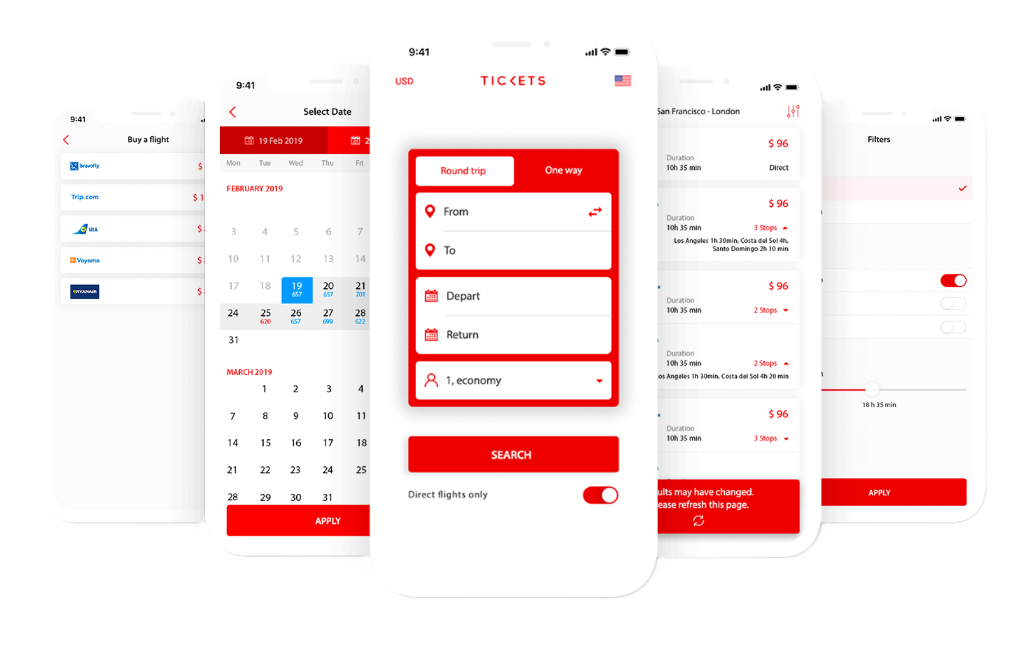
Discover incredible flight deals with TICKETS! Our user-friendly app simplifies your travel planning by comparing fares from hundreds of airlines and travel platforms, ensuring you always get the best prices for your next adventure.
How to Book the Cheapest Flights from Egypt: A Practical Guide to Timing, Routes, and Real Savings
How many days before departure should I book to find the cheapest flight from Egypt?
To find the cheapest flight from Egypt on short and medium routes, book one to two months ahead, with the sweet spot usually landing around six weeks before you fly. Booking far too early for nearby destinations often means paying more, so the old "book as early as possible" rule doesn't hold here. Long-haul international flights need a longer lead time that can stretch to several months, and busy routes out of Cairo during peak periods — Umrah trips to Jeddah and Madinah, and travel to the Gulf — need more lead time too. A flight's price changes many times before takeoff, so chasing the "perfect day" is a losing battle; it's better to set a price alert and let the TICKETS app notify you when the price moves. The rule that always wins: don't leave booking until the last two weeks before travel, because that's when prices climb the fastest.
And when exactly is the cheapest time to actually book a flight?
Ask any seasoned traveller from Cairo and they'll tell you the day a route opens for sale is among the most expensive moments to book, not the cheapest — the floor forms weeks afterward. The fare sits high very early, then drops to its lowest point around six weeks before departure, and climbs again as the plane fills up. Both extremes — booking far too early and booking last-minute — cost you more, and the real value lives in the middle. The exception is long-haul flights and peak seasons like the Eid holidays, summer, and the Umrah season in Ramadan, when seats genuinely sell out, so booking several months ahead locks in both price and availability together. Short flights outside the busy season don't call for any rush, while long or crowded routes should be booked early. Instead of guessing, let the "book now or wait" tool on TICKETS.EG read roughly twelve months of price history and tell you whether to book now or hold off.
Which days of the week are actually cheaper to fly — and is it worth it?
Plan a Tuesday or Wednesday flight and leave Sunday off your list, and the midweek days will usually carry the cheaper fares. Tuesday and Wednesday are usually the cheapest, while Sunday tends to be the most expensive day to depart. The best day shifts by route and season, so treat "midweek, not Sunday" as the rule rather than chasing one magic day. The savings are limited on cheap short routes and become clearer on long-haul flights, where steering away from the weekend can save a noticeable amount per traveller. One important distinction: this is about the day you fly, not the day you buy; the old "buy on Tuesday" advice no longer holds, because prices today update continuously rather than once a week. And to see which periods are cheapest across the year, the monthly price view shows you the cheaper months, while the midweek rule pins down the right day.
Why are two separate one-way tickets sometimes cheaper than a single airline's round-trip price?
Buy the outbound and the return as separate one-way tickets on different airlines and the two can add up to less than any round-trip fare a single carrier advertises out of Cairo. On every round-trip search, TICKETS.EG prices the outbound and the return separately, then combines the cheapest outbound with the cheapest return into a single result we call a mash-up. We only show that mash-up when it genuinely beats the best normal round-trip fare, with the savings in Egyptian pounds spelled out; if the regular round trip ties or wins, that's what you see instead. But keep in mind: a mash-up is two separate tickets with two independent confirmations, so you'll open two booking pages and pay on each one. We flag the result as a mash-up so you know exactly what you're booking, and the math only makes sense when the difference is real.
Should I book two one-way tickets instead of a round trip?
Booking the outbound and return as two separate one-way tickets can come in cheaper than a round trip from Cairo, and you don't need to hunt for it yourself, because every round-trip search on TICKETS.EG tries this automatically. When the cheapest outbound and the cheapest return sit on two different airlines, the sum of the two one-ways can come in below any single round-trip fare in Egyptian pounds. We combine them into one mash-up result, but only surface it when it beats the best normal round trip, with the savings shown. The trade-off is logistical: a mash-up is two separate tickets on two airlines, each flight is confirmed on its own, and you re-check your bags at the transfer point instead of having them checked through to the end. So for a simple round trip with hand luggage only, it usually won't matter; but if there's a short connection or checked bags, weigh the savings against the extra effort.
If my dates are flexible, how much is that flexibility actually worth?
There's no flight-saving move that beats keeping your dates open, because flexibility lets you stack several sources of savings together instead of relying on one trick. Fly midweek instead of at the weekend, then shift to a cheaper month outside the busy season, and the two together produce a real discount compared with a peak weekend fare. Shoulder seasons are the strongest single lever: the quiet stretches between peak periods like summer and the Eid holidays are usually far cheaper than the peak itself, so a Cairo–Hurghada or Cairo–Sharm el-Sheikh hop tends to land lower then. The cheapest months vary by route and region, but the rule "steer clear of the obvious peak seasons" applies almost everywhere, while picking the best day of the week saves only a little on a cheap route. That's why a full-month view beats checking one day at a time: on TICKETS.EG the date picker shows the indicative cheapest fare in Egyptian pounds for each month across several months, so the cheaper months stand out at a glance.
Is it worth flying from a different airport to save money?
Egypt turns the usual airport-swap advice on its head: Cairo is the main international gateway, and there's no cheap secondary airport near home to compare against the way there is in countries where budget carriers nest at low-fee fields. So the trick that trims the fare elsewhere mostly doesn't apply around the capital. What is worth considering is that Egypt has other real international airports like Hurghada, Sharm El Sheikh, Alexandria, Luxor, and Marsa Alam, so if you live in Upper Egypt or on the coasts, departing from the nearest airport may suit you. Just calculate the door-to-door cost when you do: the cheaper fare only wins once you add the transport cost and extra time to reach a far-off airport. TICKETS.EG detects your nearest airport, and you can set your airport manually. There's no automatic search that bundles nearby airports into one query, so if you want to try another airport, set it as your starting point and compare. And the destination map is the fastest way to scan prices from your region across many destinations. The bottom line: compare the total trip cost, not the advertised fare alone.
Is the cheaper self-transfer flight worth the risk of missing the connection?
Out of Cairo, a self-transfer (virtual interline) fare is cheaper for a blunt reason: the guarantee that the two flights line up rests with you, not the airline. It links two separate tickets, often on two airlines with no agreement between them, into one journey, and neither carrier commits to protecting that connection. The real risk is at the transfer. If your first flight is delayed and you miss the second, the airline owes you nothing; you're treated as a no-show and may have to buy a new ticket. You also collect your bags and re-check them yourself between flights, and any compensation is calculated per ticket. So size up the downside, not the headline price: leave a comfortable layover — a few hours with hand luggage and longer with checked bags or an airport change — and consider missed-connection insurance. TICKETS.EG shows these options with a warning, and the route map makes every airport change clear so you can decide with full awareness.
Are price alerts worth turning on, or just a nuisance?
Switch one on and it answers a Cairo fare's move the instant it happens, instead of trying to foresee it. A flight's price moves many times before departure, and a price alert through the TICKETS app watches the route and notifies you the moment the price actually drops, turning timing into a rule instead of a guess. Turn it on, then buy within the low-price window or on a genuine drop. Alerts are most useful when your dates are flexible, when you're booking well ahead, or when you're tracking long, highly volatile routes like distant flights to Europe and the Gulf. There's one blind spot: a temporary price can disappear before any alert goes out. And if you want to see the overall trend rather than a single notification, the "book now or wait" tool weighs roughly a year of price history and sorts it into book now, wait, or neutral. Price alerts are free in the TICKETS app.
Will this price drop, or should I just book now?
A Cairo–Jeddah fare tells you nothing in isolation; set it beside the same route's last twelve months and you can see whether it still has room to fall — and that comparison is the whole point of the "book now or wait" tool on TICKETS.EG. Give it a route and it returns one of three calls — book now, wait, or neutral — with a confidence level for each, the cheapest and most expensive months, and whether the price trend is rising, falling, or flat. The rule the data keeps confirming: if you're inside the cheap window (around six weeks for short flights, several months for long-haul) and the price is at or below the route's usual level, book. But if you're early in the cycle and prices are high for the season, waiting may be better. The strongest signal is the simplest one: don't leave booking until the last two weeks, because that's when prices climb the fastest. Still not sure? Set a price alert and let the price changes decide for you.
If it's free and doesn't add to the price, how does TICKETS.EG make money?
The fee that funds TICKETS.EG comes entirely from the seller, never from you, and only after a booking is completed. The price you see is the airline's or travel agent's own price, passed to you exactly as is with no markup. You tap "book" on a flight from Cairo and TICKETS.EG sends you to the seller's own site to pay there in Egyptian pounds, and the seller pays a commission for the referral. That commission doesn't affect the price you see or pay, so comparing flights, the monthly price view, the destination map, and the "book now or wait" tool are all free — and so are route price alerts in the TICKETS app. We earn only when a booking is completed, with no subscription, no booking fee, and nothing added to the price.
When is the cheapest time of year to book a flight?
The cheapest time of year to book a flight falls in the quiet shoulder seasons between peak periods; that choice alone beats any day-of-the-week trick. In many markets the cheapest stretches come in January and February (after the winter holidays), then again in September and October (once the summer rush eases). The most expensive periods are peak summer (roughly June to August), the two Eid holidays, and the Umrah season in Ramadan, when travel for Umrah and visiting family in the Gulf reaches its highest levels. The ranking shifts by route and region — and a Southern Hemisphere season or a local occasion can flip it — but the rule "steer clear of the obvious holiday and summer peaks" applies almost everywhere. On TICKETS.EG you can view destination price insights that show the cheapest and most expensive months across twelve months, so the cheaper periods stand out easily; then search for flights on the results page to see the fares available right now.